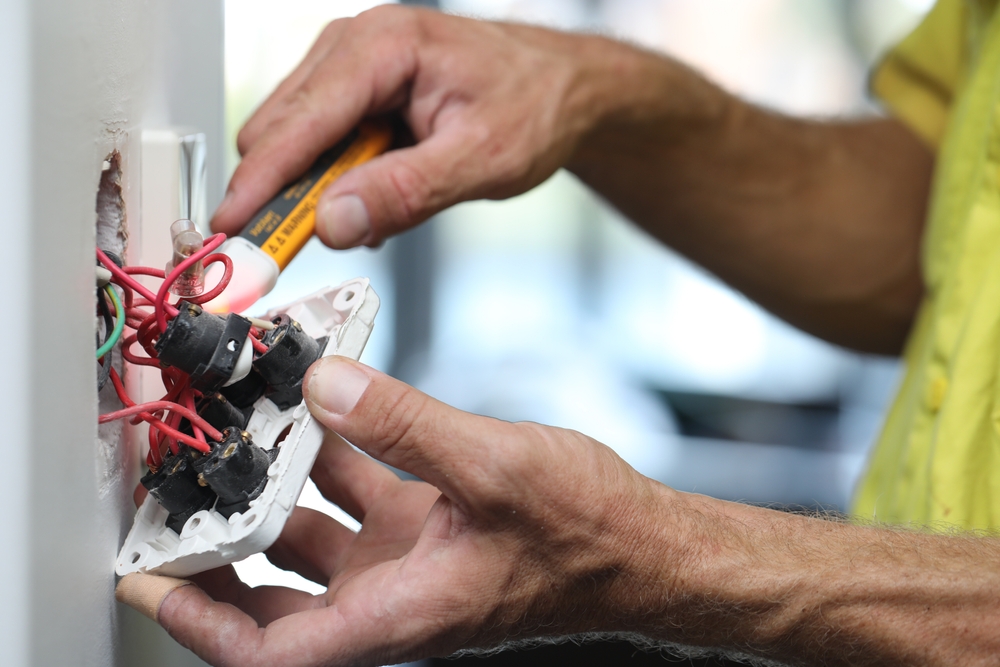
A tripping circuit breaker is one of the most common calls we receive. It is also one of the most frequently misunderstood situations. Many homeowners treat a tripping breaker as a minor annoyance — something to reset and move on from. In many cases, that is fine. But in others, the breaker is signaling something that genuinely needs attention.
This article explains how circuit breakers work, the three main reasons they trip, and how to tell the difference between a routine overload and a real problem.
How a Circuit Breaker Works
A circuit breaker is an overcurrent protection device. Every circuit in your home is rated for a maximum current load — typically 15 or 20 amps for general household circuits. The breaker for that circuit is designed to trip — interrupt the flow of electricity — when the current exceeds that rating for long enough to create a heat risk in the wiring.
The key phrase is "for long enough." Modern circuits can handle brief spikes in current, like when a motor starts. A breaker trips when sustained elevated current threatens the wiring. This is intentional and correct behavior. The breaker is protecting your wiring from overheating, which is one of the primary causes of electrical fires.
When a breaker trips, it does not simply turn off. It moves to a middle position between on and off. To reset it properly, push it fully to the off position first, then back to on. Trying to flip a tripped breaker directly to on often will not work because the mechanism has to be reset through the off position.
Three Reasons Breakers Trip
1. Overloaded Circuit
The most common cause of a tripping breaker is a circuit that is being asked to carry more current than it is rated for. This typically happens when too many appliances are running on the same circuit simultaneously.
In older homes, circuits were designed for the electrical loads of that era — fewer appliances, lower overall demand. Adding a space heater, a window air conditioner, or multiple large electronics to circuits that were sized for much lighter use can push them over capacity.
If your breaker trips when you run a specific combination of devices in a room, overloading is the likely cause. The solution may be as simple as redistributing the load — moving one of the devices to an outlet on a different circuit — or it may require adding a dedicated circuit for a high-draw appliance.

2. Short Circuit
A short circuit occurs when electrical current takes an unintended path — typically when a hot wire (black or red) comes into direct contact with a neutral wire (white) or a ground wire (green or bare copper). The sudden, significant jump in current causes the breaker to trip almost instantly.
Short circuits can occur in several places: inside a device or appliance (most commonly), inside a wall outlet or switch box, or within the wiring itself. They are more serious than overloads because they indicate a fault in the electrical path rather than just too much load.
If a breaker trips immediately when you reset it — without anything new being turned on — a short circuit is a more likely cause than an overload. Finding the source requires systematic testing: unplug everything on the circuit, reset the breaker, and see if it holds. If it does, plug devices back in one at a time. If it trips immediately even with nothing plugged in, the short is likely in the wiring or a switch box.
3. Ground Fault
A ground fault occurs when current flows through an unintended path to ground — often through a person, water, or damaged insulation that allows a wire to contact a grounded surface. Standard circuit breakers do not detect ground faults specifically (though GFCI outlets and GFCI breakers do).
In a standard circuit without GFCI protection, a significant ground fault will trip the breaker because it creates a current imbalance. In areas with GFCI protection, the GFCI outlet or breaker will trip much faster and with much less current — which is why GFCI protection in wet areas matters so much for safety.
The Breaker Itself Can Be the Problem
Circuit breakers are mechanical devices, and like all mechanical devices, they can wear out. A breaker that trips at loads well below its rating, or a breaker that trips even when the circuit is not heavily loaded, may simply be a failing breaker. This is more common in older panels and in breakers that have tripped many times over years of use.
A failed or failing breaker can also do the opposite: fail to trip when it should. This is less obvious but more dangerous, because it means the protective function is not working. If you have a breaker that never trips despite heavy circuit use, that is worth having tested rather than viewed as a positive outcome.
Some older panel brands are known to have reliability issues with specific breaker models. If your home has a Federal Pacific Electric (Stab-Lok) panel or a Zinsco/Sylvania panel, it is worth having those evaluated by a qualified electrician. These specific panel types have documented issues with breakers failing to trip under fault conditions.
When Should You Call Someone?
Some situations are appropriate to assess yourself — redistributing load, identifying the obvious appliance that is causing an overload, checking if a GFCI needs to be reset. Others need professional evaluation:
- A breaker that trips immediately upon reset, with nothing plugged in
- A breaker that trips repeatedly in rooms without obvious heavy use
- Any signs of burning smell, discoloration, or warmth near the panel
- A breaker that is hot to the touch
- An older panel that has not been evaluated in many years
- Multiple breakers tripping at the same time
The general principle is: if you cannot identify a clear, logical cause for the tripping, or if the circuit is showing any signs of heat or damage, it is better to have a technician take a look than to keep resetting and hoping for the best.
What Happens If You Ignore a Tripping Breaker?
If the cause is a simple overload and you address it by reducing the load on the circuit, nothing further needs to happen. The breaker did its job.
If the cause is a short circuit or a wiring fault that is not addressed, the situation typically gets worse over time. Arcing in wiring or connections can degrade insulation further, and eventually the wiring itself can reach temperatures that ignite surrounding materials. This is a slow process, not an instantaneous one — which is one of the reasons why people sometimes ignore warning signs for months or years before something serious happens.
The presence of smoke detectors reduces the risk of a fire going undetected, but it does not eliminate the underlying electrical fault. If your breaker is repeatedly tripping and you cannot identify a clear cause, that is the situation that benefits from a proper diagnosis.