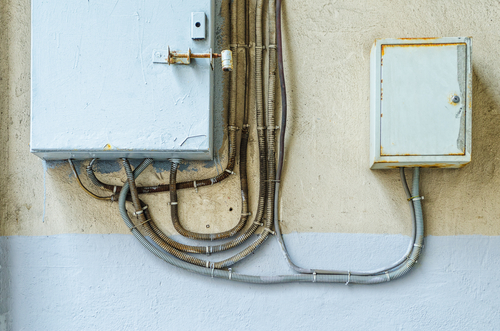
Older homes have a lot going for them — established neighborhoods, solid construction, character that newer builds often lack. They also tend to have electrical systems that were designed for a different era of power use, and in some cases, wiring that has aged past the point where it should be relied on without evaluation.
This is not a reason to panic if you own an older home. Most older wiring does not cause problems. But there is a category of warning signs that homeowners in older properties should be aware of, because catching a wiring issue early typically means a much smaller and less disruptive repair than catching it late.
This article covers the most common signs that wiring in an older home may need attention, what those signs actually indicate, and which situations call for a professional assessment rather than a watch-and-wait approach.
Understanding What "Old Wiring" Actually Means
The age concern with older wiring is primarily about two things: the physical condition of the wiring materials and the design standards in effect when the wiring was installed.
Physical condition: Electrical wire insulation degrades over time. Plastic insulation (which became standard in residential wiring in the mid-20th century) can become brittle and crack with age and heat cycling. When insulation deteriorates, conductors that should be separated can come into contact with each other or with combustible materials.
Design standards: Electrical code requirements have changed substantially over the past several decades. Homes built before GFCI protection was required (around 1971 for bathrooms, later for other wet areas), before arc-fault protection requirements (more recent), or before three-wire grounded outlets became standard may have wiring that was perfectly correct when installed but no longer meets current safety standards for those specific applications.
Neither of these automatically means wiring needs to be replaced. It means it deserves to be understood and assessed, not just assumed to be fine because it has been there for 40 years without obvious problems.
Knob-and-Tube Wiring
Knob-and-tube (K&T) wiring was the standard method of residential electrical installation from roughly the 1880s through the 1940s. If your home was built before 1950, there may be original K&T wiring in the attic, walls, or basement — sometimes alongside later wiring, sometimes exclusively.
K&T wiring uses ceramic knobs to anchor wires to framing members and ceramic tubes where wires pass through them. The conductors are individual and separated, which was actually a reasonable heat-dissipation design for its era. The issue is that the rubber insulation used in K&T wiring has generally degraded significantly after 70 or more years. Brittle, cracked insulation is a legitimate concern.
Additional K&T concerns include the absence of a ground conductor (K&T is two-wire: hot and neutral only) and a tendency to have been modified improperly over the decades — splices made in walls rather than in accessible junction boxes, connections to modern wiring done without proper connectors, and so on.

Aluminum Wiring
Between approximately 1965 and 1973, aluminum wiring was commonly used in residential branch circuit wiring as an alternative to copper (which was expensive at the time). If your home was built or had electrical work done during this period, there is a reasonable chance it has aluminum wiring in some or all of the branch circuits.
Aluminum wiring itself is not inherently unsafe — it is used in service entrance cables to this day. The problem with branch circuit aluminum wiring is a connection issue. Aluminum expands and contracts more than copper with temperature changes, which over years can cause connections at outlets, switches, and fixtures to loosen. Loose connections arc. Arcing degrades connection quality further, creating a cycle that can eventually cause overheating or fire.
Homes with aluminum wiring should have it evaluated by a qualified electrician. There are two primary approaches to addressing aluminum wiring connections: using COPALUM crimps (a specialized method of adding short copper "pigtails" to aluminum wire ends) or anti-oxidant compound and CO/ALR rated devices at each connection point. Simply replacing outlets and switches with standard devices rated for copper only is not an acceptable approach.
Specific Warning Signs to Watch For
Lights That Flicker or Dim Without Explanation
Occasional minor dimming when a large appliance starts — an air conditioner compressor, a refrigerator — is relatively normal and generally not a concern. Lights that flicker regularly in one room, or lights that dim when a switch is operated in a different room, or flickering that seems random and unrelated to any appliance activity — those are more concerning.
Persistent flickering typically indicates a loose connection somewhere in the circuit. In newer homes, this is usually at an outlet, switch, or fixture box. In older homes, loose connections can also be at junction boxes inside walls — sometimes boxes that were placed there during a renovation and not accessible without opening the wall.
Burning Smell Without a Clear Source
An electrical burning smell is often described as a plastic or rubber odor, different from wood smoke or food burning. If you notice this smell and cannot trace it to an appliance, an outlet, or a switch, the source may be inside a wall, in the attic wiring, or at the panel.
This is one of the warning signs that warrants relatively prompt attention rather than a watch-and-wait approach. The source of the smell is overheating, and overheating in wiring can progress to charred insulation and eventually ignition of surrounding materials over days, weeks, or months.
Outlets and Switches That Seem Warm
Under normal conditions, outlets and switches should not feel warm. A slight warmth on a dimmer switch that has been on for hours in a hot room might be borderline normal. Noticeable warmth on a standard outlet or switch is not.
Warm outlets and switches typically indicate either a loose connection (which causes resistance and heat at that point) or excessive current draw on the circuit. In older homes, the combination of aged connections and higher modern loads makes this more common than it might be in newer wiring.
Discoloration, Scorch Marks, or Melting
Any visible discoloration around an outlet or switch cover — yellowing, browning, or blackening of the plate or the wall surface around it — indicates that overheating has occurred at that location. This is not a cosmetic issue to be resolved by replacing the cover plate. The source of the heat needs to be identified and repaired.
Melted or deformed outlet covers, melted insulation visible in the outlet slots, or any evidence that high heat has been present is a clear sign that the wiring inside that outlet box has a serious problem.
Buzzing or Crackling Sounds
Electrical wiring should be essentially silent. Buzzing, crackling, or sizzling sounds from switches, outlets, walls, or the panel are signs of arcing — electricity jumping across a gap between conductors or between a conductor and another surface. Arcing produces both sound and heat, and in enclosed spaces like wall cavities, it can ignite surrounding materials.
If you hear buzzing from inside a wall and cannot attribute it to a known mechanical source (like a pipe), it is worth having evaluated rather than dismissed.
Frequently Tripping Breakers
As covered in our article on circuit breakers, a breaker that trips repeatedly without obvious cause may indicate a short circuit or ground fault in the wiring rather than simple overloading. In older homes, deteriorating insulation can create points of contact between conductors — leading to intermittent short circuits that do not have an obvious appliance as their cause.
The Two-Prong Outlet Question
Homes with two-prong (ungrounded) outlets throughout are often assumed to be in need of a complete rewiring. In practice, the situation is more nuanced. Ungrounded outlets do not provide ground fault protection in the way that grounded outlets do, which matters for sensitive electronics. But the absence of grounding does not, by itself, mean the wiring is dangerous or about to fail.
The options for addressing ungrounded outlets range from adding ground wires (which requires running new wiring) to installing GFCI protection (which provides shock protection even without a physical ground) to simply accepting the limitation. A qualified electrician can help you understand what is appropriate for your home and your priorities.
When Is a Wiring Assessment Worth It?
Not every older home needs a full wiring evaluation — but there are situations where it is a worthwhile investment:
- You are purchasing a home that is more than 40 years old and the electrical system has not been evaluated recently
- You have noticed any of the warning signs described in this article
- The home has known aluminum wiring or visible knob-and-tube wiring
- You are planning a significant renovation that will involve the electrical system
- The panel is original and more than 30 years old
- You are adding high-draw appliances or a home office and want to understand whether the existing circuits can support the additional load
An assessment is not a commitment to a major repair project. It is a way to understand what you have, what — if anything — needs attention, and what the timeline for addressing it might be. Most of the time, the news is either fine or involves targeted repairs that are less disruptive than homeowners often fear.